Write in Your Journal Like Audre Lorde: 4 Ways In
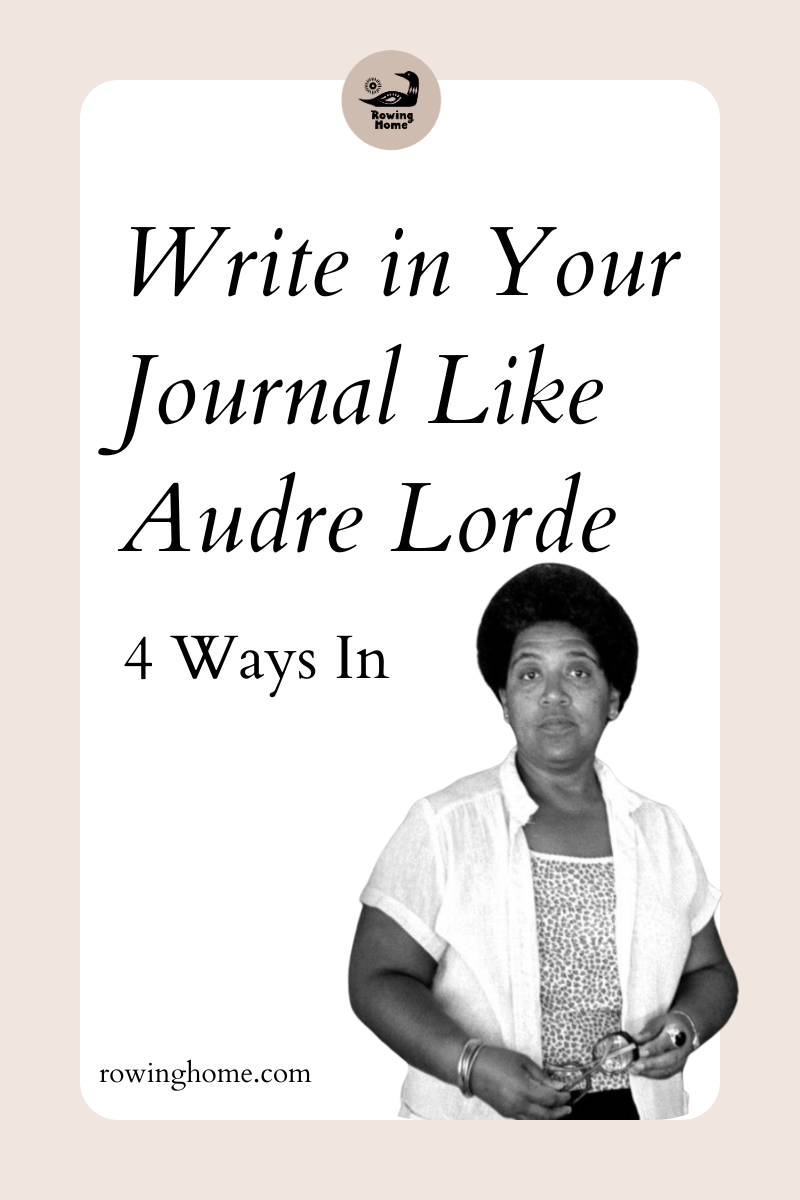
A woman whose work became even more urgent in the face of cancer diagnoses, Audre Lorde wrote in her journals to clarify and declare what actually mattered—why live? In answering this question for herself, she also discovered that her approach to cancer was no different from her approach to living, writing, and loving. She went into battle with cancer just as she showed up in every other area of her life, voicing urgent truths in order to not regret her silences.
While many writers have published their journals (Anaïs Nin being perhaps the most famous) Lorde published only excerpts from her journals in two works: The Cancer Journals and A Burst of Light and Other Essays. For now, Lorde’s journals remain unpublished and archived at Spelman College in the Audre Lorde Collection (they span the years 1950 to 1992).
Don’t assume that it was always easy for Lorde to turn to her journal as an excuse to back away from your own writing practice. It’s not always simple:
“I wanted to write in my journal but couldn’t bring myself to. There are so many shades to what passed through me in those days. And I would shrink from committing myself to paper because the light would change before the word was out, the ink was dry.”
Take inspiration from Lorde, discover new awareness and depth in your self-honesty, and engage with your journal writing practice by experimenting with these four ways in:
1. Talk to Ghosts
2. Be Outraged
3. Speak Today’s Truth
4. Voice the Body
1. Talk to Ghosts
Appeal to the dead—whether a childhood friend, lovers, mentor, dead grandfather, or anyone who lives in your heart, dead or alive. It can be someone living at a remove, who belongs to the past, whether lost to distance or circumstances. What do you need to tell them? What did you never dare ask? Ask now.
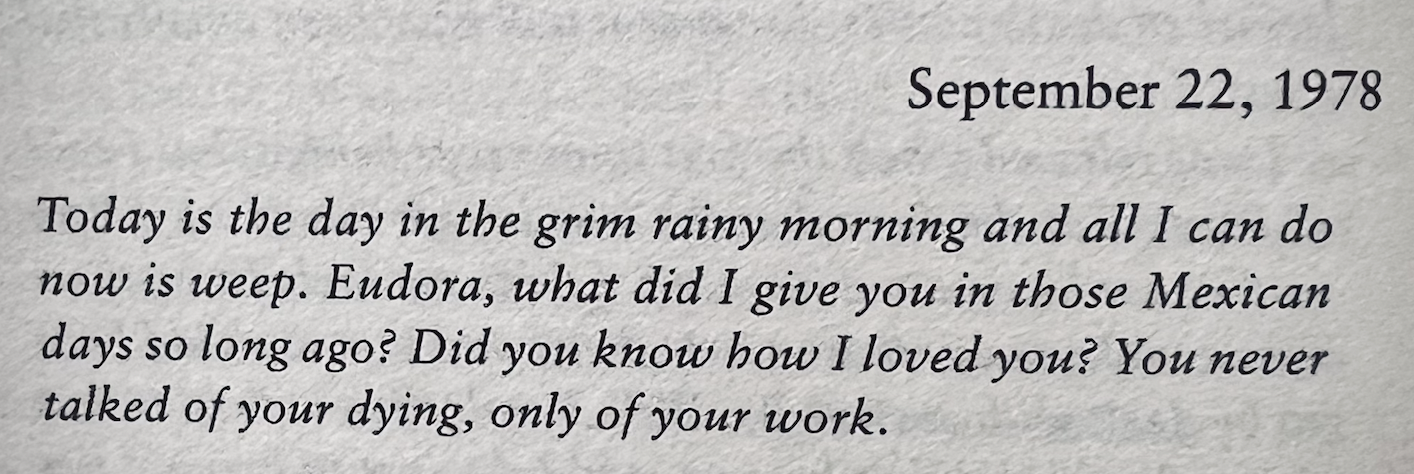
Audre Lorde wrote to her former lover as if the conversation were taking place in the here and now. And why wouldn’t she, when Eudora Garrett too had gone through breast cancer? On September 22, 1978, Lorde wrote:
Today is the day in the grim rainy morning and all I can do now is weep. Eudora, what did I give you in those Mexican days so long ago? Did you know how I loved you? You never talked of your dying, only of your work. (The Cancer Journals, p. 28.)
Past lovers can be our teachers, particularly if they looked into a similar abyss that now lies before us. It needn’t be a lover necessarily. Writing to someone important to your past or the development of your identity can be healing. What do you know now that you didn’t know when you knew them? You can write about your new perspective. You can write to them what you cannot say. Your journal can hold it all.
2. Be Outraged
Not only was Lorde provided with a fake breast to tuck into her bra, but her healthcare providers used guilt and shame to pressure her to wear it by explaining that the other patients would feel more hopeful if she appeared whole. Of course, they were unsuccessful. Lorde knew their advice felt wrong for her; she used her journal to sort out her intellectual position and its alignment with her instincts. She confided in her journal about her emotional reality in this entry:
I cannot wear a prosthesis right now because it feels like a lie more than merely a costume, and I have already placed this, my body under threat, seeking new ways of strength and trying to find the courage to tell the truth. (The Cancer Journals, p. 53.)
In the essay surrounding this journal excerpt, she makes the intellectual case for her decision:
“Prosthesis offers the empty comfort of “Nobody will know the difference.” But it is that very difference which I wish to affirm, because I have lived it, and survived it, and wish to share that strength with other women. If we are to translate the silence surrounding breast cancer into language and action against this scourge, then the first step is that women with mastectomies must become visible to each other.” (The Cancer Journals, p. 54.)
Take what doesn’t feel quite right to you, that truth that has not yet risen to the surface within your consciousness, and coax it out into the light, taking a position that is both emotional and well considered.
3. Speak Today’s Truth
When we admit the most pressing truth within us, it creates room for greater truths, more varied truths, on future pages in our journals. Lorde knew this acutely: I must let this pain flow through me and pass on. If I resist or try to stop it, it will detonate inside me, shatter me, splatter my pieces against every wall and person that I touch. (The Cancer Journals, p. 4.)
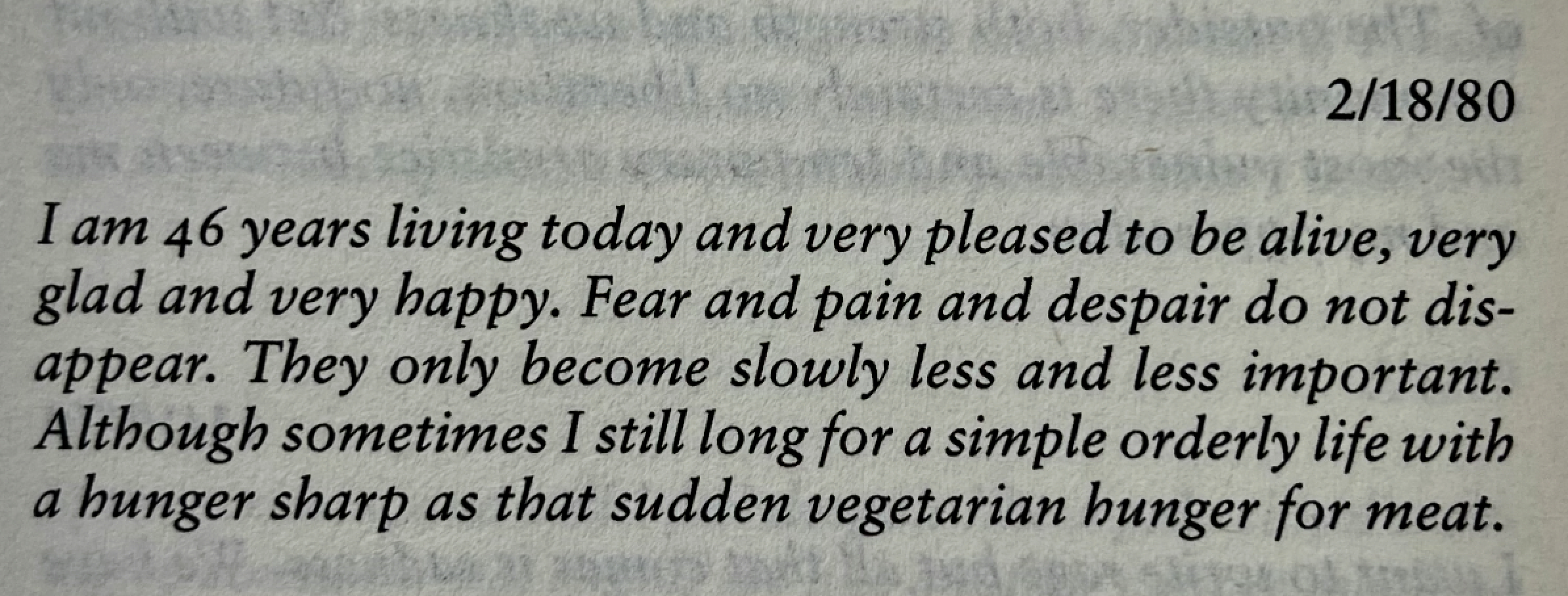
Today’s truth often looks very different from tomorrow’s. A journal doesn’t require us to be consistent; it doesn’t judge. Lorde wrote the following on February 18, 1980:
I am 46 years living today and very pleased to be alive, very glad and very happy. Fear and pain and despair do not disappear. They only become slowly less and less important. Although sometimes I still long for a simple orderly life with a hunger sharp as that sudden vegetarian hunger for meat. (The Cancer Journals, p. 6.)
And this on April 6, 1980:
Somedays, if bitterness were a whetstone, I could be sharp as grief. (The Cancer Journals, p. 6.)
This is an invitation to speak today’s truth; whatever you might habitually tamp down or back away from feeling—speak of it.
4. Voice the Body
Lorde wrote about the pain and discomfort of her breast cancer treatment in various ways. She appears to encourage herself to do so, if only for a record and as a reminder for her future self, for those higher aims, not for complaint alone. She was in dialogue with her physical reality. To say not only, ‘I have cancer,’ but to speak of all dimensions of that experience. On October 10, 1978, Lorde wrote:
I want to write about the pain. The pain of waking up in the recovery room which is worsened by that immediate sense of loss. Of going in and out of pain and shots. Of the correct position for my arm to drain. The euphoria of the 2nd day, and how it’s been downhill from there. (The Cancer Journals, p. 17.)
During her battle with liver cancer years later, Lorde wrote on November 17, 1986:
I spend time every day meditating upon my physical self in battle, visualizing the actual war going on inside my body. As I move through he other parts of each day, that battle often merges with particular external campaigns, both political and personal. The devastation of apartheid in South Africa and racial murder in Howard Beach feel as critical to me as cancer. (“The Selected Works of Audre Lorde,” A Burst of Light, p 157.)
You can give voice to the experience of your body. All bodies experience pain, uneasiness, and bizarre sensations. What does it feel like? Say what your body cannot, speak for it.
Audre Lorde
Audre Lorde, a self-proclaimed “Black, lesbian, feminist, socialist, mother, warrior, poet” was prolific—publishing 13 volumes of poetry and six books of prose. She achieved her hope to inspire other Black women to speak out or, at the very least, to feel seen and represented.
In her book, The Cancer Journals, Lorde gives a guided tour of her journal entries, describing her thoughts and feelings about her cancer diagnosis and treatment and sharing selected excerpts of her journal entries from the years 1978-1980. Her journal entries share what only the raw quality of a journal entry can, truth. The journal entries reveal how Lorde “thought” on the page, her depth of self-honesty, and the standards to which she held herself and her life’s work—high ones.
~
This post is based on the journal entries in Audre Lorde’s book, The Cancer Journals, and her essay collection, A Burst of Light and Other Essays. You can find more of Lorde’s most personal autobiographical writings in Zami: A New Spelling of My Name and I Am Your Sister: Collected and Unpublished Writings. For an introduction to Audre Lorde’s poetry and feminist writings, be sure to read The Selected Works of Audre Lorde, a new collection edited by Roxane Gay, author of Bad Feminist.
Cover image by Robert Alexander